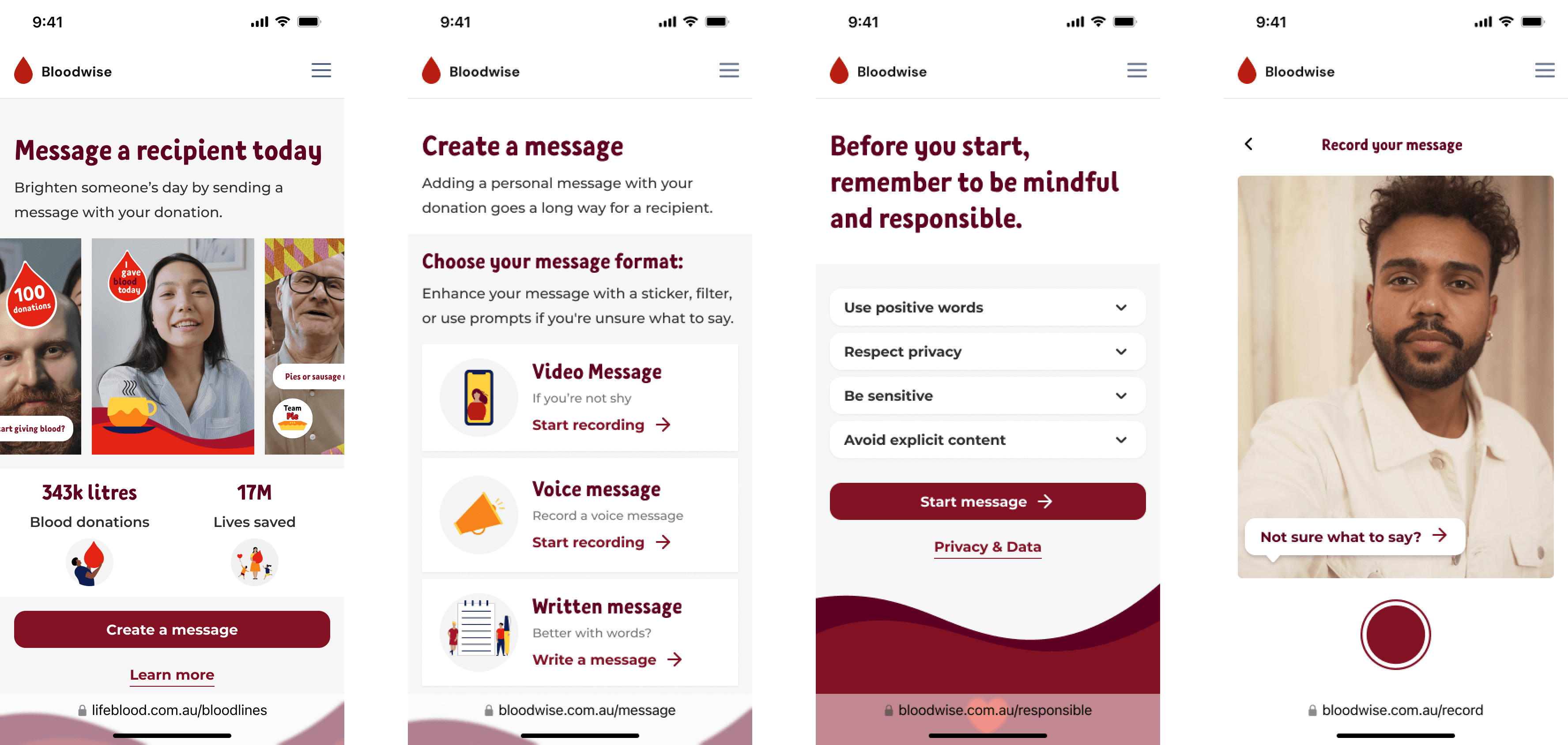
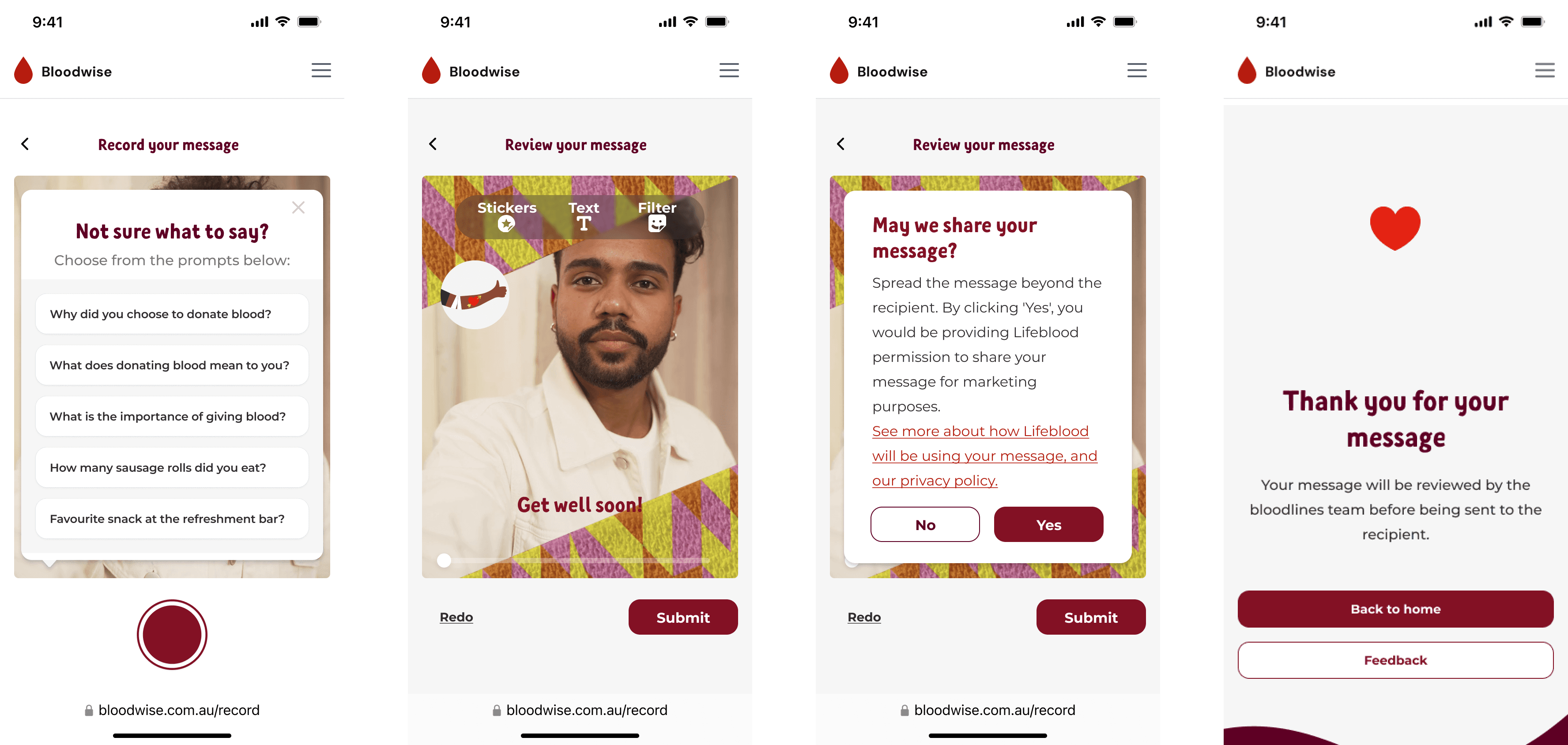
My role - UX/UI Designer
Client - Bloodwise
Key Activities - Secondary research, User interviews, sketching, wireframes, prototyping
Duration - 4 week sprint
Summary
In a four week sprint an interactive mobile prototype was designed to help bridge the gap between blood donors and recipients. The solution is trying to improve the well being of recipients of blood and make them feel less isolated during the process by allowing blood donors to send messages of encouragement to recipients. The aim is to help Bloodwise inform them with development options in the hopes of securing seed funding. Due to the confidential nature of this project, specific details, including company name, personnel names, logos, and certain design elements have been omitted.
THE PROBLEM
Bridging the gap between blood donors and recipients
In 2018 Bloodwise conducted a proof of concept trial at their blood donation centres, where they allowed blood donors to record a video message that would be sent to recipients. Their trial uncovered that recipients do not have the same experience, for them blood transfusions are a clinical process, a sterile bag hanging in a hospital room. Additionally, they have found that these video messages minimises the feeling of isolation and improves the well being of the recipients. Bloodwise would like to take the trial further and develop a bridge that closes the gap between blood donors and recipients by giving blood donors a platform to be able to send messages to recipients.
RESEARCH OBJECTIVE
Understanding what is means for blood donors to donate
Research is focused on Bloodwise’s primary target audience, blood donors. The aim is to understand their motivations around donating blood and how they feel about sending messages to recipients and their preferred modes of communication.
The research involved;
7 one on one interviews.
4 staff interviews.
2 contextual inquiries where two members of the team went through the process of donating blood.
Desktop research
INSIGHTS
It's about more than just giving blood
Community is Key: Donors truly value the community aspect of the blood donation process, highlighting the importance of fostering connection and shared experiences with blood recipients.
Diverse Communication Preferences: 44% of donors prefer video, while 24% still opt for voice or text messages. Offer multiple communication channels to cater to these varied preferences.
Strong Desire for Connection: A significant 83% of donors want to connect with recipients. This presents a powerful opportunity to design features that facilitate meaningful connections and showcase impact.
WIREFRAMES
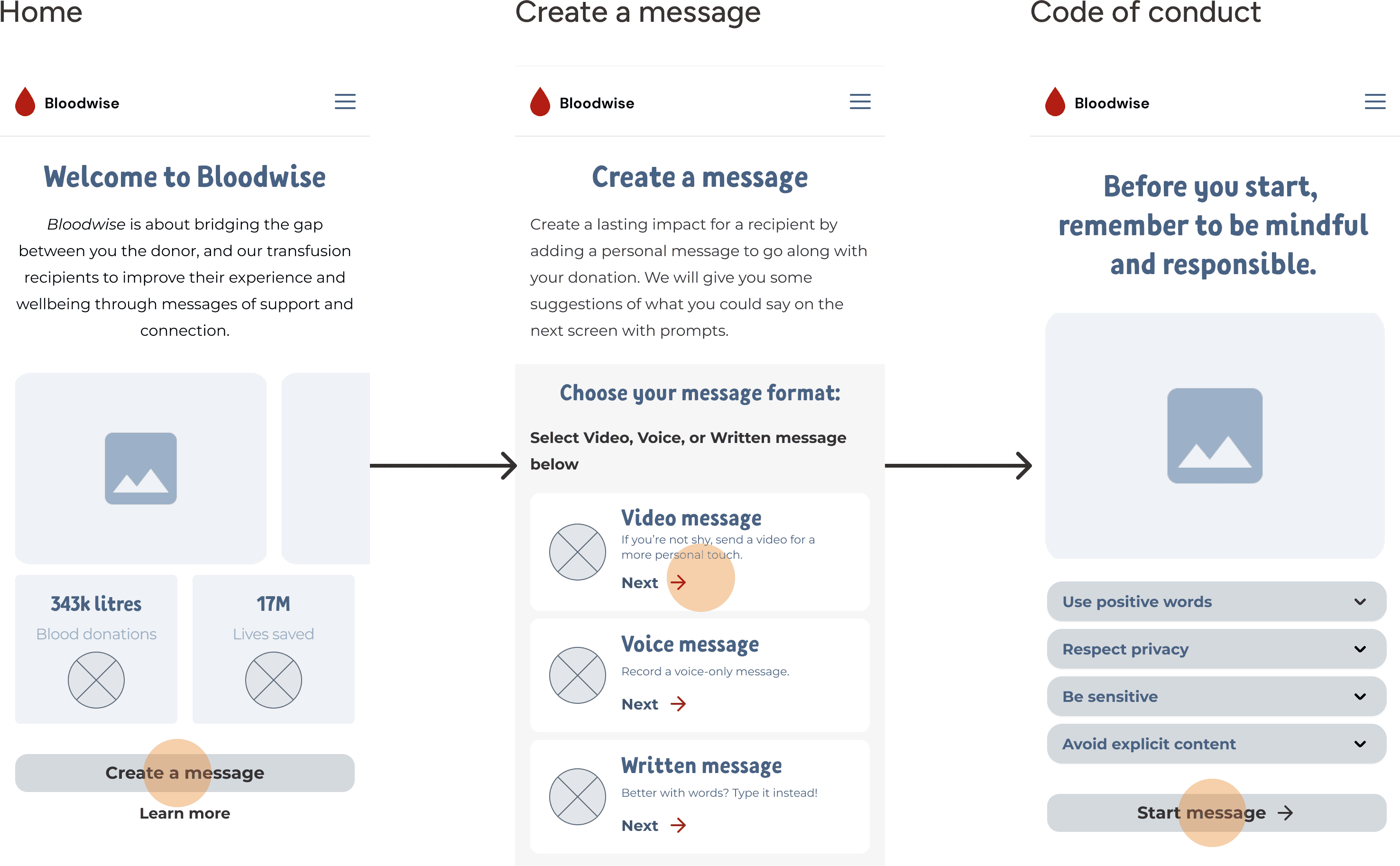
A web app that caters to different types of communication
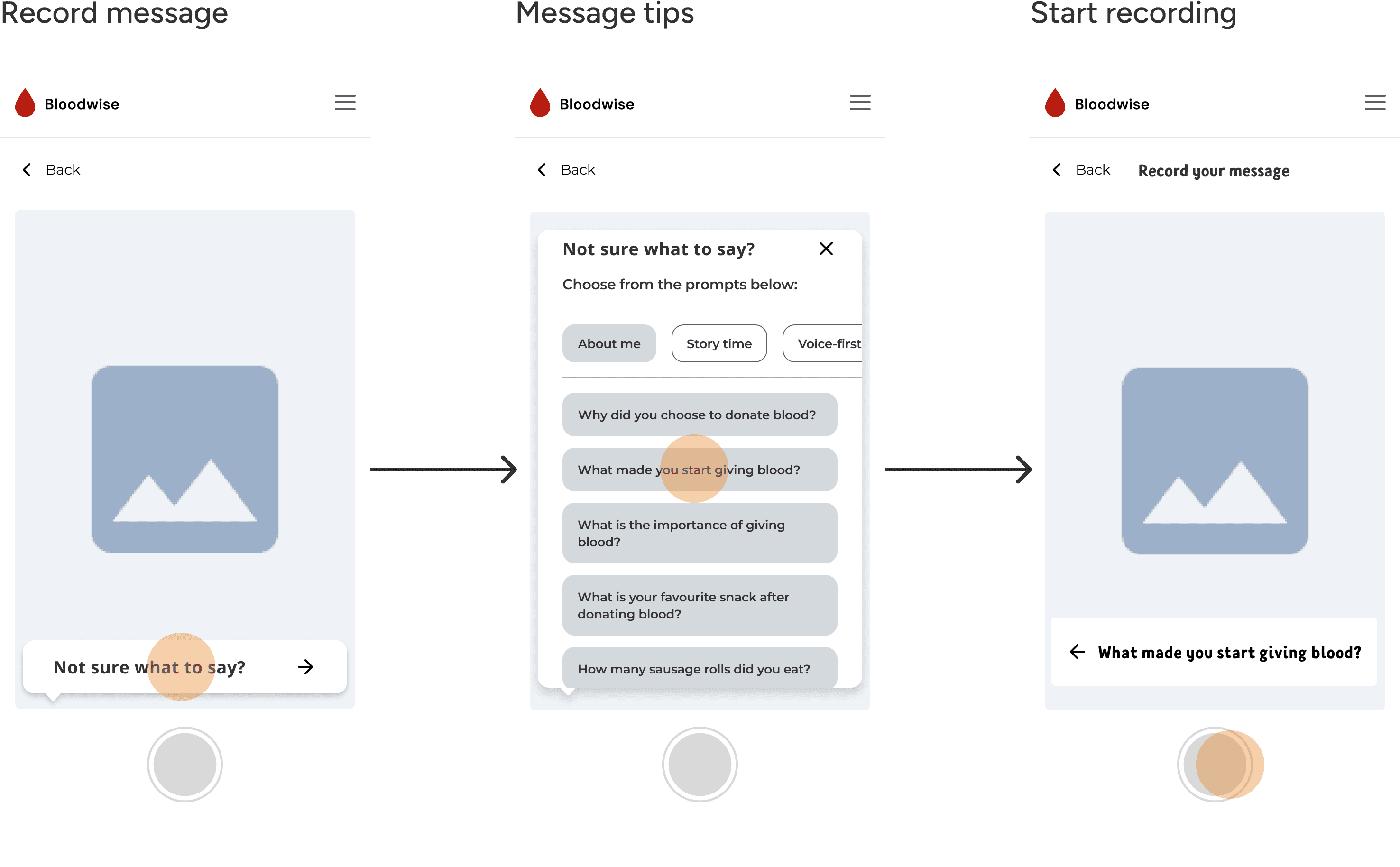
These wireframes focus on enhancing the blood donor experience by addressing key communication and engagement points:
Guided Communication: Donors are given example messages for recipients and can select their preferred communication method. A code of conduct is provided to guide their interactions.
Message Assistance: To help donors, a list of prompts (from Bloodwise's trial) is available before recording messages.
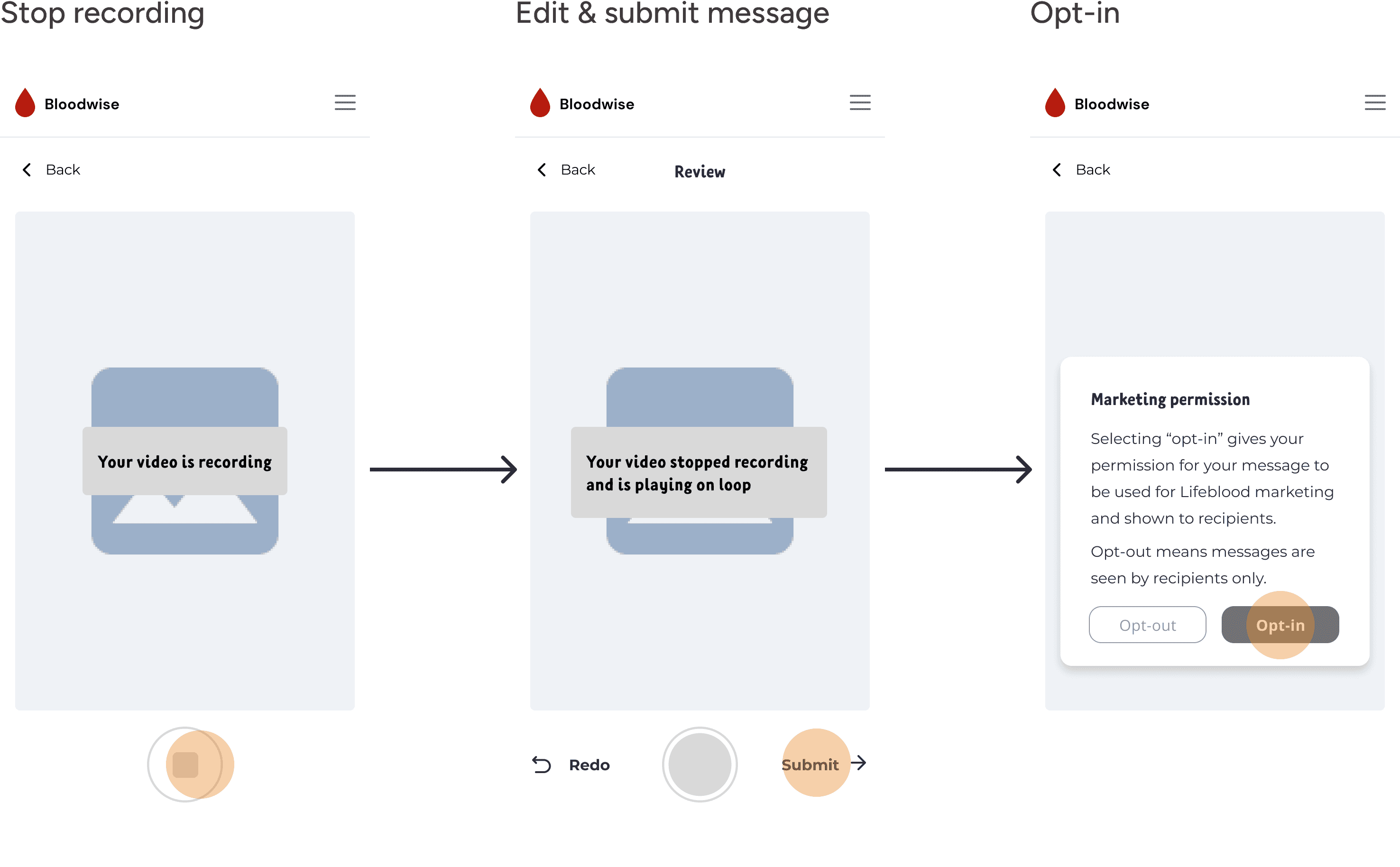
Message Review & Flexibility: After recording, donors can loop and review their message, with options to redo or submit.
Effortless Onboarding: Meeting Bloodwise's requirements, the platform offers an "Opt-in" feature, eliminating the need for a full sign-up process.
Key requirements;
The solution must be stand alone and not be dependant on Bloodwise’s existing platforms.
Bloodwise do not want their target audience to have to sign up to use the platform.
USABILITY TESTING
Making it simple for blood donors to connect with recipients
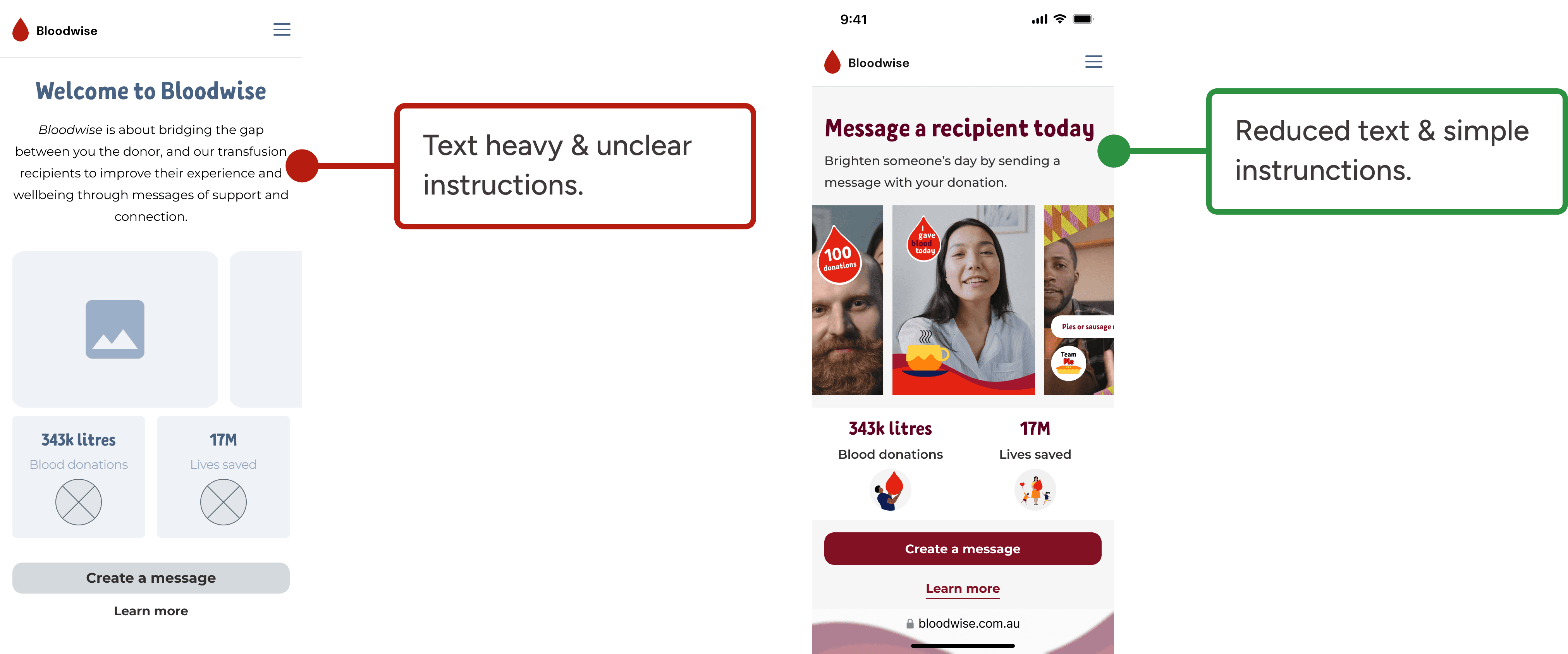
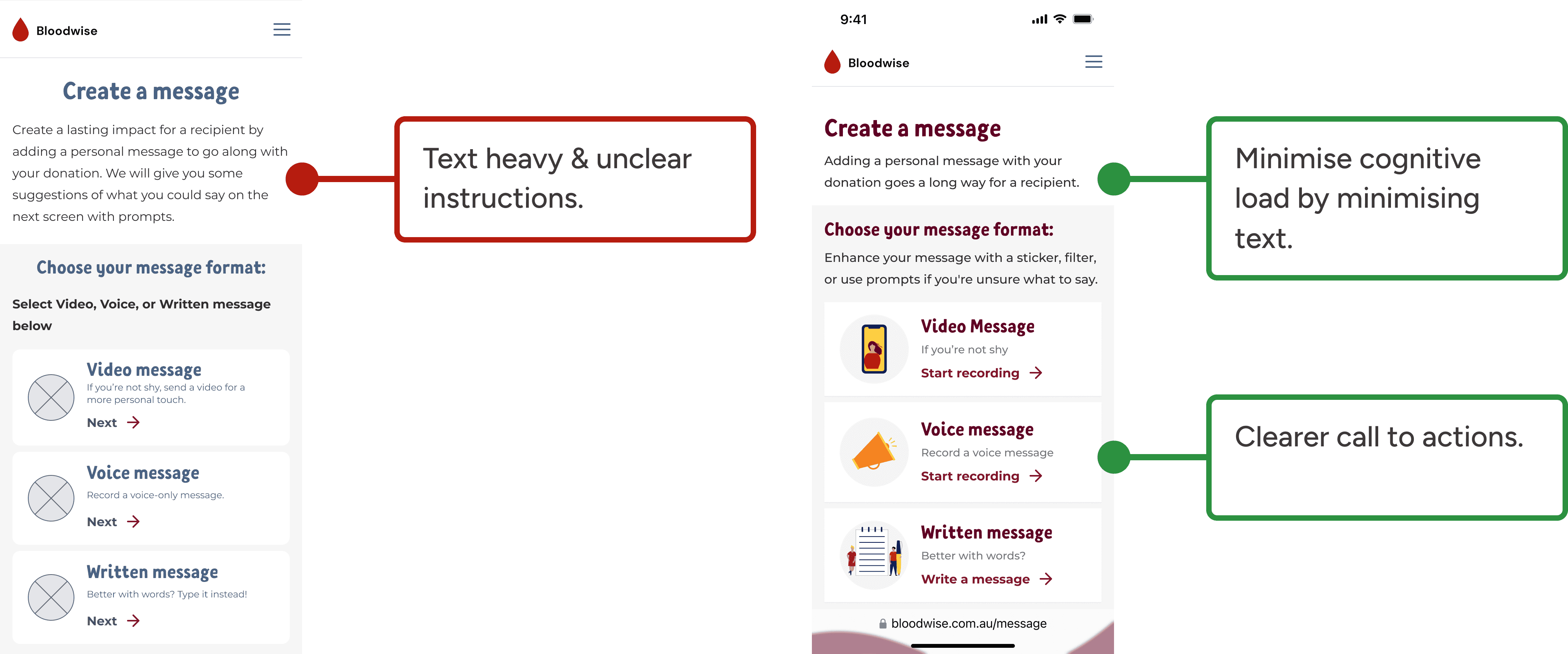
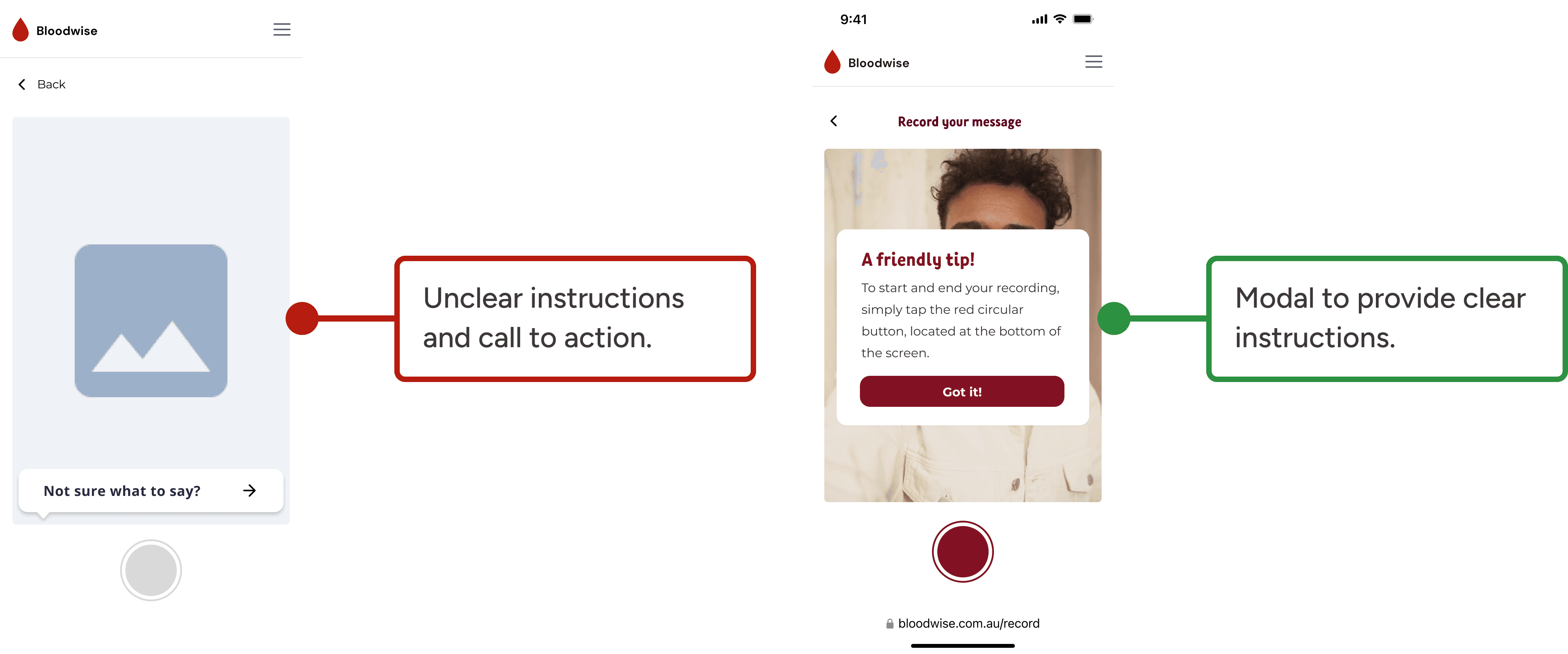
Usability tests showed the landing page was too dense and lacked clear directions. To fix this, content was condensed and headlines were made more direct. The call-to-actions for choosing a message format were also improved for clarity. Finally, since 3 out of 9 testers couldn't complete the "Record your message" section due to confusion, a modal was added to provide clear instructions.
OUTCOME
A web app that enables blood donors to create and send personalised messages to recipients based on their communication preferences. This initiative also yielded deeper insights into donor behaviours, laying the groundwork for building a stronger, more engaged community.
REFLECTION
In a four-week sprint, we designed an interactive prototype to address the isolation and well-being of blood recipients. By enabling blood donors to send personalised messages - video, audio, or text -we aimed to foster stronger connection between these two groups. While direct research with recipients due to project constraints, our solution was informed by one on one interviews with donors, secondary research and stakeholder interviews.
By providing a platform for donors to express their support, recipients will feel less alone during their treatment journey. This connection has the potential to significantly improve their mental and emotional well-being. To validate this hypothesis, future research is essential to understand recipients' perspective and measure the impact of such a platform.
This project has highlighted the importance of human-centred design, even with tight timelines. By prioritising empathy and understand user needs, we were able to develop a solution that addresses a critical gap in patient care.